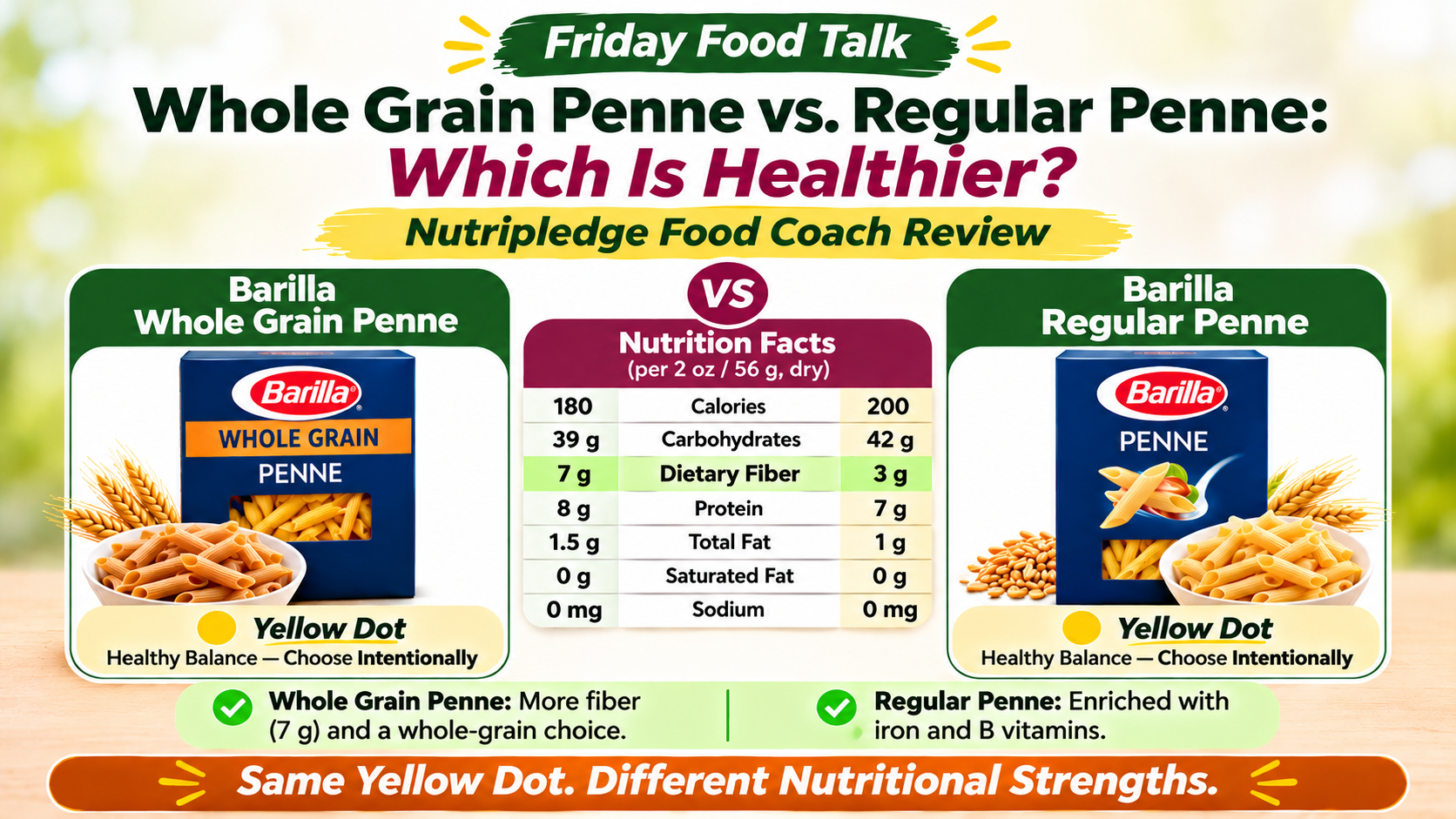
Whole-Grain vs. Regular Pasta: Which Is Healthier? Nutripledge Food Coach Review
Whole-Grain Pasta vs. Regular Pasta: What's the Difference?
Is whole-grain pasta healthier than
regular pasta?
Many
consumers assume whole-grain pasta is automatically lower in calories and
carbohydrates, while regular pasta offers fewer nutritional benefits. But the
differences may surprise you!
For this week's Nutripledge Friday
Food Talk, we compared two popular pasta products:
- Barilla Classic Penne
- Barilla Whole Grain Penne
Using their Nutrition Facts labels and
the Nutripledge Food Coach Dot Rating System, we evaluated their
nutritional characteristics, ingredients, and potential benefits for heart
health and overall wellness.
The surprising result? Both pastas
earned the same Yellow Dot rating!
However, whole-grain pasta provides
more than twice the dietary fiber of regular pasta, while enriched regular
pasta offers added iron and B vitamins.
So, which pasta should you choose?
Let's explore why two foods can earn
the same Food Coach rating while offering different nutritional advantages.
Nutripledge
Food Coach Ratings: Both Earned a Yellow Dot!
🟡 Barilla Classic Penne — Yellow Dot | Healthy Balance —
Choose Mindfully
🟡 Barilla Whole Grain Penne — Yellow Dot | Healthy Balance —
Choose Mindfully
Both products received a Yellow Dot
based on their Nutripledge Food Coach evaluations.
The Food Coach identified several
favorable nutritional characteristics in both pastas:
- Moderate calories per serving
- Healthy balance of total fat and
saturated fat
- Zero trans fat
- Zero sodium
- Healthy balance of carbohydrates
and fiber
- Healthy balance of protein and
added sugars
- Favorable food additive profile
- No artificial flavors or colors
Additionally, Barilla Classic Penne
received recognition as a good source of iron.
What
Does the Yellow Dot Mean?
The Nutripledge Yellow Dot recognizes
favorable nutritional characteristics while encouraging consumers to consider
serving size, overall nutrient quality, and how a food fits into an overall
balanced eating pattern.
A Yellow Dot does not mean that two
foods are nutritionally identical.
This pasta comparison shows why
understanding and reading individual nutrients and ingredients matters as much
as understanding the overall rating.
Barilla
Whole Grain vs. Classic Penne: Nutrition Facts Comparison
Let's compare the nutritional profiles
of both products using the same serving size: 2 ounces (56 g) of dry pasta.
|
Nutrient |
Barilla Classic Penne |
Barilla Whole Grain Penne |
|
Calories |
200 |
180 |
|
Total fat |
1 g |
1.5 g |
|
Saturated fat |
0 g |
0 g |
|
Trans fat |
0 g |
0 g |
|
Sodium |
0 mg |
0 mg |
|
Total carbohydrates |
42 g |
39 g |
|
Dietary fiber |
3 g |
7 g |
|
Protein |
7 g |
8 g |
|
Total sugars |
1 g |
1 g |
Source: Product Nutrition Facts labels
supplied for this Nutripledge review. Values are based on dry pasta without
sauces or toppings.
What
Do These Numbers Tell Us?
1. Calories and carbohydrates are
similar.
Whole Grain Penne contains 180
calories per serving, compared with 200 calories in Classic Penne.
Similarly, Whole Grain Penne contains
39 g of carbohydrates, compared with 42 g in Classic Penne.
The differences are relatively small.
The takeaway: Choosing whole-grain pasta isn't primarily about cutting
calories or carbohydrates.
2. Whole-grain pasta provides
significantly more dietary fiber.
This is the most important difference.
- Barilla Classic Penne: 3 g fiber
- Barilla Whole Grain Penne: 7 g
fiber
Whole-grain pasta provides 4
additional grams of dietary fiber per serving, more than twice the amount
found in regular pasta.
3. Both provide plant-based protein.
Whole Grain Penne provides 8 g of protein,
compared with 7 g in Classic Penne.
Both can contribute protein to a
balanced meal, especially when combined with beans, lentils, tofu, or other
plant-based protein sources.
4. Both are naturally low in fat and
sodium.
Neither product contains saturated fat
or sodium according to the labels evaluated.
However, the nutritional quality of
your finished pasta dish will also depend on the sauce, toppings, preparation
methods, and portion size.
Benefits
of Whole-Grain Pasta for Heart Health
1.
Higher Dietary Fiber
Whole-grain pasta is made using the
whole wheat kernel, including the bran, germ, and endosperm.
These components contribute dietary
fiber and naturally occurring nutrients.
Dietary fiber supports:
- Digestive health and regularity
- Fullness and satisfaction after
meals
- Healthy blood glucose management
- Cardiovascular health
Certain types of soluble fiber can
help lower LDL cholesterol. Whole grains also contribute to overall fiber
intake, although the cholesterol-lowering effects depend on the types and
amounts of fiber consumed.
2.
Naturally Occurring Nutrients
Whole grains provide a combination of
vitamins, minerals, dietary fiber, and beneficial plant compounds.
Replacing some refined grains with
whole grains is consistent with heart-healthy dietary recommendations.
3.
A Practical Whole-Food, Plant-Based Choice
Whole-grain pasta makes it easy to
incorporate more whole grains into everyday meals.
It can be paired with vegetables,
legumes, herbs, and tomato-based sauces to create a satisfying, nutrient-dense
meal.
The Nutripledge Perspective: Whole-grain pasta offers a meaningful fiber advantage
without requiring major changes to your favorite pasta recipes.
Is
Regular Pasta Unhealthy? Understanding Enriched Wheat
No! Regular pasta is not inherently
unhealthy.
This is an important distinction
because nutrition education should help consumers make informed choices rather
than label foods as simply good or bad.
What
Is Enriched Pasta?
Barilla Classic Penne is made from
refined durum wheat semolina and enriched with selected vitamins and minerals.
During grain refining, some naturally
occurring nutrients and fiber are removed.
Enrichment restores or adds certain
nutrients, including iron and several B vitamins.
According to the Barilla Classic Penne
label provided for this review:
|
Nutrient |
Amount per serving |
Daily Value |
|
Iron |
2 mg |
10% |
|
Thiamin (Vitamin B1) |
0.5 mg |
40% |
|
Riboflavin (Vitamin B2) |
0.2 mg |
15% |
|
Niacin (Vitamin B3) |
5 mg |
30% |
|
Folate |
199 mcg DFE |
50% |
These nutrients contribute to
important functions, including energy metabolism, red blood cell formation, and
normal cellular function.
However, enrichment does not restore
all the fiber and naturally occurring components removed during refining.
Why
Does Regular Pasta Have More Detailed Vitamin and Mineral Information?
Interestingly, the Barilla Classic
Penne label provided specific quantities for several vitamins and minerals,
while the Whole Grain Penne label listed nutrients without providing their
individual amounts in the available information.
More detailed nutrient information
does not necessarily mean a product is more nutritious.
Whole grains naturally contain
vitamins and minerals, even when the available label does not quantify all of
them.
Important
Nutrient Data Limitation
For the Nutripledge Food Coach
evaluation of Barilla Whole Grain Penne, calcium, iron, potassium, and vitamin
D values were unavailable.
For the purpose of the analysis,
values below 10% Daily Value were assumed.
These assumptions are not verified
measurements of the product's actual nutrient content.
Therefore, the two Food Coach
evaluations should be interpreted with this limitation in mind.
Why
Did Both Pastas Receive the Same Nutripledge Food Coach Rating?
🟡 Yellow Dot | Healthy Balance — Choose Mindfully
The Nutripledge Food Coach evaluates
multiple nutritional characteristics rather than relying on a single nutrient.
Both products demonstrated favorable
nutritional characteristics across several categories, including calories, fat,
saturated fat, sodium, carbohydrates, protein, and added sugars.
However, their nutritional strengths
differ.
Barilla Classic Penne:
- Made from enriched refined wheat
- Provides added iron and B
vitamins
- Contains 3 g dietary fiber per
serving
Barilla Whole Grain Penne:
- Made from whole-grain durum wheat
flour
- Provides 7 g dietary fiber per
serving
- Retains the components of the
whole wheat kernel
Same
Rating. Different Nutritional Strengths.
Two foods may receive the same Food
Coach rating while differing in ingredients, fiber content, processing, and
micronutrient profiles.
The Food Coach rating is a starting
point—not a substitute for understanding the nutritional quality of the food.
How
to Make Pasta a Heart-Healthy, Plant-Based Meal
Whether you choose regular or
whole-grain pasta, the way you build your meal can make a significant
difference.
1.
Add Colorful Vegetables
Include spinach, broccoli, mushrooms,
zucchini, tomatoes, bell peppers, or other vegetables.
Vegetables add dietary fiber,
vitamins, minerals, and beneficial plant compounds.
2.
Include Plant-Based Protein
Add lentils, chickpeas, white beans,
tofu, or edamame.
These ingredients provide additional
protein and fiber, helping make the meal more satisfying and nutritionally
balanced.
3.
Choose a Heart-Healthy Sauce
Try a tomato-based sauce flavored with
garlic, onions, basil, oregano, and other herbs.
When using packaged sauces, compare
sodium, saturated fat, and added sugar.
4.
Be Mindful of Portions
The Nutrition Facts labels use a
serving size of 2 ounces of dry pasta.
Individual portions may vary depending
on energy needs, activity levels, and the other foods included in the meal.
5.
Limit Excess Saturated Fat and Sodium
Use heavy cream sauces, large amounts
of cheese, and salty processed toppings less often.
Instead, build flavor with vegetables,
herbs, spices, and modest amounts of unsaturated fats.
Nutripledge
Heart-Healthy Pasta Inspiration
Try
whole-grain penne with tomato-garlic sauce, spinach, mushrooms, white beans,
and fresh basil.
This combination adds colorful
vegetables, plant protein, and dietary fiber to create a satisfying whole-food,
plant-based meal.
Nutripledge
Verdict: Which Pasta Should You Choose?
Barilla
Classic Penne
🟡 Yellow Dot | Healthy Balance — Choose Intentionally
A reasonable choice that provides
carbohydrates, plant protein, and added vitamins and minerals through
enrichment.
It can fit into a balanced eating
pattern, especially when combined with vegetables and plant-based protein.
Barilla
Whole Grain Penne
🟡 Yellow Dot | Healthy Balance — Choose Intentionally
Nutripledge's preferred everyday
choice because it provides more than twice
the dietary fiber of Classic Penne and contains whole-grain wheat.
The higher fiber content makes it
particularly appealing for individuals working toward a heart-healthy,
fiber-rich eating pattern.
The
Bottom Line
Both pastas can fit into a healthy
diet.
However, choosing whole grains more
often is a practical way to increase dietary fiber and support long-term
cardiovascular wellness.
It's not just about the pasta—it's about the quality of your carbohydrates and the balance of your entire meal.
From Yellow Dot Pasta to a Green-Yellow Dot Meal: Nutripledge Inspiration
Frequently
Asked Questions About Whole-Grain and Regular Pasta
Is
whole-grain pasta healthier than regular pasta?
Whole-grain pasta generally provides
more dietary fiber and retains more naturally occurring components of the wheat
kernel. In this comparison, Barilla Whole Grain Penne provides 7 g fiber per
serving, compared with 3 g in Classic Penne.
Both can fit into a balanced eating
pattern, but whole-grain pasta is generally the preferred everyday choice for
its higher fiber content.
Is
whole-grain pasta lower in carbohydrates?
Not necessarily.
Barilla Whole Grain Penne contains 39
g carbohydrates per 2-ounce dry serving, compared with 42 g in Classic Penne.
The main nutritional advantage of
whole-grain pasta is its higher fiber content, not a dramatic reduction in
carbohydrates.
Is
regular pasta unhealthy?
No. Regular enriched pasta can be part
of a balanced diet.
It provides carbohydrates, plant
protein, and added nutrients such as iron, folate, thiamin, riboflavin, and
niacin.
However, whole-grain pasta generally
provides more dietary fiber.
Is
whole-grain pasta better for heart health?
Whole-grain pasta can support a
heart-healthy eating pattern because it provides more dietary fiber and
whole-grain nutrients.
Its overall benefits depend on the
complete meal, including portion sizes, sauces, vegetables, and other
ingredients.
Why
did both Barilla pastas receive the same Nutripledge Food Coach rating?
Both Barilla Classic Penne and Whole
Grain Penne earned a Yellow Dot | Healthy Balance — Choose Mindfully rating
because they met favorable criteria across multiple nutritional categories.
However, the same rating does not mean
the products are nutritionally identical.
Whole Grain Penne contains more fiber,
while enriched Classic Penne provides added vitamins and minerals.
The Food Coach rating helps consumers
make informed choices while considering the food's overall nutritional
characteristics.
Our
Friday Food Talk Takeaway
It's
Not Just About Carbs — It's About the Quality of Your Carbs!
At Nutripledge, Friday Food Talk
helps consumers understand packaged foods through our Food Coach Dot Rating
System.
Our goal isn't to label foods as
simply good or bad. It's to help you understand their nutritional strengths and
limitations so you can make informed choices.
And through Therapeutic Thursday,
we encourage you to bring those choices into your kitchen with wholesome,
plant-based recipes.
Know Your Food. Make Informed Choices.
Cook for Better Health.
Food Is Medicine — Eat with Intention,
Responsibility, and Confidence.
For Better Heart Health and Overall
Wellness.
Sources
and Product Information
- Barilla Classic Penne — Nutrition
Facts and ingredient label supplied for this review.
- Barilla Whole Grain Penne —
Nutrition Facts and ingredient label supplied for this review.
- Nutripledge Food Coach Dot Rating System
- American Heart Association — Whole Grains, Refined
Grains, and Dietary Fiber
- USDA
MyPlate — Grains
Nutrition Analysis Note: The Nutripledge Food Coach ratings reflect the product
information entered for these evaluations. Calcium, iron, potassium, and
vitamin D values were unavailable for the Whole Grain Penne analysis, so values
below 10% Daily Value were assumed. Actual nutrient contents may differ.
Ratings should be interpreted alongside ingredients, serving size, and overall
dietary quality.
Disclaimer: This content is intended for general nutrition and
wellness education and does not replace individualized medical or nutrition
advice. Product formulations and nutrition labels may change. Always review the
current package label. Individual nutritional needs vary based on health
status, medical conditions, medications, and lifestyle. Consult your healthcare
provider or registered dietitian for personalized guidance.
Disclaimer: The information provided on this page is for general nutrition and wellness education only and is not intended to replace individualized medical or nutrition advice. Individual nutrition needs vary based on health status, medical conditions, medications, and other factors. Please consult your healthcare provider or a qualified nutrition professional for guidance specific to your needs. For personalized nutrition support, explore our Medical Nutrition Therapy services.